Category: UX Designing

  • Navigating the UI/UX Landscape: Essentials of Application Design

    Navigating the UI/UX Landscape: Essentials of Application Design

    Picture this: Ritu, a small business owner in Indore, dreams of launching a web app to streamline her operations and reach more customers. She envisions a sleek, intuitive interface that makes life easier for her and her clients. But, as she embarks on her web app development journey, she quickly realizes that creating a user-friendly application is more complex than she initially thought. With so many factors to consider—user needs, design principles, and technological constraints—Ritu feels overwhelmed. This story is not unique. Many entrepreneurs and developers face similar challenges when diving into the world of web development.

    Navigating the UI/UX landscape is crucial for the success of any application. It’s not just about making things look good; it’s about creating an experience that feels natural and intuitive. In this blog, we’ll explore the essentials of application design, delve into some lesser-known but impactful aspects of UI/UX, and provide insights that most websites overlook. Whether you’re part of a web app development company in Indore or an aspiring developer, these insights will help you create applications that stand out.

    Understanding the Basics of UI/UX Design

    Before we delve into the essentials, let’s clarify what UI (User Interface) and UX (User Experience) design entail. UI focuses on the look and layout of the app—the buttons, icons, spacing, typography, and color schemes. UX, on the other hand, is about the overall feel of the app, ensuring it is user-friendly, efficient, and satisfying to use.

    In web development, particularly in web app development, understanding the interplay between UI and UX is paramount. A beautiful interface (UI) that is difficult to navigate (poor UX) will frustrate users and drive them away. Conversely, a highly functional app with a poor visual design may not attract users in the first place.

    The Essentials of Application Design

    1. User Research and Personas

    One of the most critical but often neglected aspects of UI/UX design is user research. Understanding your users—their needs, preferences, behaviors, and pain points—forms the foundation of effective design. Creating detailed user personas helps in tailoring the app’s design to meet specific user needs. Ritu, for instance, would benefit from personas representing her diverse customer base, ensuring her app caters to different user scenarios.

    1. Information Architecture (IA)

    Information Architecture involves structuring and organizing content in a way that is logical and user-friendly. Good IA ensures users can find information quickly and easily, reducing frustration and improving overall user experience. This includes everything from the main navigation to the way individual pages are structured. Effective IA is often what separates a mediocre app from an exceptional one.

    1. Wireframing and Prototyping

    Wireframes are like the blueprints of your application. They outline the basic structure and layout before any visual design or coding begins. Prototyping takes this a step further, creating interactive mockups that can be tested with real users. This step is crucial in web app development, allowing you to identify and resolve potential issues early on.

    1. Accessibility

    Accessibility is about making your app usable for everyone, including people with disabilities. This involves designing for screen readers, providing alternative text for images, ensuring sufficient color contrast, and enabling keyboard navigation. While often overlooked, accessibility can significantly broaden your app’s user base and enhance its usability.

    Lesser-Known but Impactful Aspects of UI/UX

    1. Microinteractions

    Microinteractions are subtle animations or feedback mechanisms that guide users and enhance their experience. Think of the ‘like’ button on social media platforms or the pull-to-refresh action in email apps. These small details can make interactions feel more natural and engaging, increasing user satisfaction and retention.

    1. Emotional Design

    Emotional design focuses on creating a positive emotional response in users. This could be through delightful animations, engaging content, or a sense of accomplishment upon completing a task. Emotional design is about creating an experience that resonates with users on a deeper level, fostering loyalty and advocacy.

    1. Performance and Speed

    An often-underestimated aspect of UX is performance. Slow load times and laggy interactions can frustrate users and drive them away. Optimizing your app’s performance—through efficient coding, minimizing resource usage, and leveraging fast-loading technologies—is crucial in providing a smooth user experience.

    1. Contextual and Personalized Experiences

    Personalization can significantly enhance user experience by providing relevant content and features based on user behavior and preferences. Contextual design takes this further by adapting the app’s functionality based on the user’s current context, such as location, time of day, or device being used. This level of customization can make users feel valued and understood.

    Real-World Applications and Insights

    For a web app development company in Indore, integrating these UI/UX essentials into your projects can set you apart from competitors. Here are some practical steps to apply these concepts:

    Conduct Thorough User Research: Use surveys, interviews, and analytics to gather data about your users. Create detailed personas and use them to guide design decisions.

    Invest in Prototyping Tools: Tools like Sketch, Figma, and InVision can help in creating detailed wireframes and interactive prototypes. This allows for early testing and iteration based on user feedback.

    Prioritize Accessibility:Use guidelines such as the Web Content Accessibility Guidelines (WCAG) to ensure your app is accessible to all users.

    Optimize Performance: Regularly test your app’s performance using tools like Google PageSpeed Insights and implement best practices for speed optimization.

    Leverage Microinteractions and Emotional Design: Incorporate small, thoughtful interactions that delight users and consider the emotional impact of your design choices.

    Conclusion

    In the ever-evolving field of web development, staying ahead requires more than just technical skills. It involves a deep understanding of UI/UX principles and the ability to anticipate and meet user needs in innovative ways. Whether you’re a seasoned developer or part of a web app development company in Indore, embracing these essentials can transform your applications from merely functional to truly exceptional.

    Remember Ritu, our small business owner? By applying these UI/UX principles, she can create an app that not only meets her business goals but also delights her customers, setting her on the path to success. As you embark on your own web app development journey, let user-centric design be your guide, ensuring your applications are not just used, but loved.


  • The 7 Unmatched Benefits of a Mobile-Friendly Website

    The 7 Unmatched Benefits of a Mobile-Friendly Website

    In the past couple of years, all of us have come to realize that people and their mobile phones are inseparable. Whether you pick a scenario at home or at your work or anywhere else, you will see people using their phones. It has become more like a basic need that we were fulfilling every day and every night.

    That being said the above becomes one of the major benefits of making your website mobile-friendly. Generally speaking, any business website that has been optimized for mobile viewing is one that delivers information in a fast as well as effective manner.

    In order to understand the benefits of mobile website optimization, we will have to first understand what is the process is all about.

    A mobile web design or responsive web design is a website that can adapt to any screen size and so becomes easy to use on the mobile as it is on tablets as well as desktops without having to pinch or scroll.

    When you hire a responsive web design service provider you will notice that they will give you a design that instinctively adapts to the phone or device that it is being viewed on so that it looks great on all of the devices. 

    Accordingly, 74% of people out there say that they are more likely to return to a mobile-friendly web design rather than one which is not responsive.

    When you get a custom web design company in Indore, make sure that your mobile-friendly web design has the following elements:

    • Quickly loads
    • Has less text
    • Has very less pop-ups
    • Contains simple drop-down menus
    • Has easy to locate the contact information
    • Has prominent calls to action
    • Have buttons that are large as well as easily targeted

    According to Google, when you don’t have a mobile-friendly web design, it acts as your business shutting down for one day almost every week.

    Now that we know a little bit about mobile-friendly web design and responsive websites let’s dig into the unmatched benefits of a website that is completely mobile friendly:

    1. Attracting more visitors

    It has been observed that around 40% of any website’s traffic is now coming from mobile phones. This means that almost 50% of your users require a website that is mobile-friendly so that they can easily and effortlessly engage with your business. The fact is that there are many mobile users who will simply click away from a page on your website if it does not respond the way they wanted. 

    2. Mobile users are more into buying

    We all want to be informed instantly about everything that is happening in our fast-paced generation. This is why one of the major benefits of mobile optimization becomes that it offers mobile users a way to faster purchasing whenever they feel like doing so. This makes mobile users bigger buyers of your business if they are provided with a mobile-friendly web design

    Demographics of Mobile Device Ownership and Adoption in the United States | Pew Research Center

    3. The download speed is faster

    When you hire someone for responsive web design services they will make sure that your mobile-friendly web design is specifically designed for mobile standards. This means that it will include optimal download speed which will eventually turn out to be less waiting and more browsing for your users. 

    4. Improved search engine optimization

    When you have a mobile website, it would provide improved rankings on mobile-friendly search engines including Google as well as Yahoo. Not only this but, it will also allow placement in a growing number of mobile as well as local directories. Eventually, this would mean that your mobile-friendly website would rank higher on search engine listings. And this just means that it will be easier for users to find your business.

    1. Enjoy a lower maintenance cost

    A mobile-friendly web design and a responsive website might cost you a little bit more upfront however it is definitely much lower in terms of maintenance cost. For example, you will not need to reformat duplicate or even add features to your content twice. You could go for custom web design in Indore and many professionals will help you in building your responsive website to help your business grow using all of these benefits that come along with it. 

    1. Comes with new advertising opportunities

    Since mobile advertising is the kind that is growing at a very good pace it presents many new opportunities that can help you reach your target audiences. If your business advertises on Google ad words or any other PPC network then there is a good chance that your advertisements may also be appearing in mobile listings. However, with the process of mobile advertising, you would have to ensure that your advertisements are leading to mobile-optimized landing pages and not on regular desktop sites. This will give you optimal results as well as maximum ROI. 

    Forbes India - Mobile Advertising Is Undeniably The Future

    1. Give your users an improved experience

    When you offer your users, a mobile-friendly web design, they will be able to enjoy an improved user experience. This is because mobile websites are designed specifically for handheld devices. We all know by now that there is nobody who would like to browse a desktop website on their phone. Research has shown that mobile-optimized websites come with an evidently improved user experience as well as satisfaction making a positive impression on the users that are visiting the website. 

    There are many more advantages to a mobile-friendly web design. Your business can easily boom if you hire web development company indore to get yourself a responsive website. If you are thinking to go for custom web design in Indore, then do visit our website and get in touch with us at seo@infocratsweb.com

  • 7 Unique Benefits of Dynamic Website

    7 Unique Benefits of Dynamic Website

    Website Development has gained a lot of focus over the years in the attempt of improving the UX for brands and their consumers. Any professional web development agency aims to design sites that are more intuitive, beautiful, and have multiple options to view on multiple devices including- desktops, smartphones, iPads, laptops, etc. One such exciting upgrade to website development happened through the making of dynamic websites.

    If you’re building a new corporate website, you might be wondering whether to go with a static or dynamic design.

    Or perhaps you’re simply unsure what the difference is.

    Don’t worry, we’re here to assist you.

    What is a Dynamic Website?

    Technically speaking, a dynamic website is built using advanced server technologies like PHP, JavaScript, or ASP to create more dynamic web pages. By dynamic website, we mean pages that are more interactive in nature and dynamically change in accordance with user type, time, language, and geographical location the viewer resides in. Dynamic websites require web programming & database designs that help in creating a more user-driven web page that changes as the user wants. Website design companies like INFOCRATS create dynamic websites, where the content and information on the page change according to the user commands.

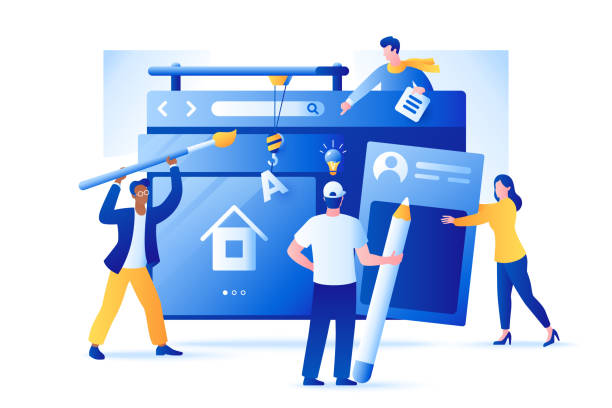
    Web Development Vector Art, Icons, and Graphics for Free Download

    Below is a closer look at  the benefits of Dynamic Websites:

    1. Easier to Add New Content

    Do you plan to add blogs or news pages to your site?

    Dynamic websites hold a big database of content, also called a content management system (CMS). This can be easily updated-unlike static sites, where every web page is a separate entity.

    With a robust website, it’s usually as simple as clicking the ”NEW POST” or ”ADD BLOG” button in a template and hitting publish. The design and formatting of the blog page will be automatically be taken care of, creating a polished, professional look.

    Website developers will enable you to alter other parts of your site to display the latest blog posts or news. There’s no need to add new posts to these sections, as it will be showcased automatically on the page.

    1. Offers a Better User Experience

    A dynamic website is one that is designed to be particularly user-friendly, allowing users to make modifications to the website as needed. These websites are interactive, allowing users to leave a comment or a response based on their experience while on the site. This allows the creator to receive real-time feedback on their work, which they can subsequently enhance. Building easy navigation, adding and upgrading functionalities, personalizing each visitor’s browsing experience, and so on can all be done quickly and efficiently, all of which will improve the overall experience.

    1. More Personalized Browsing 

    One of the most significant advantages of having a dynamic website is the ability to provide consumers with a personalized browsing experience. Suggestions for content and products, features for recently viewed goods, and even material based on geography and demographics can all help keep people on your page and possibly take the next step with your company.

    1. Looks More Professional

    While professional static sites are possible, they lack the functionality and other aspects that many people demand from a modern website. Dynamic websites not only give the functions and engagement that visitors expect, but the simplicity of editing that comes with them also helps to elevate the professional appearance.

    The better your dynamic design’s responsive element performs, the more you can target your audience. It’s all about creating a one-of-a-kind experience each time.

    Benefits of Good Website Development for Your Business - Agreem Tech

    1. Stronger Targeting

    Each user will have much easier access to the interactions they desire than before. They’ll be more visually engaged, well-informed, and able to connect with you better.

    Furthermore, each person’s visit to your website will be unique each time they return. Maybe they want jeans from your online store one day and then simply want accessories the next. While looking on the fly, people may only be interested in your contact information, but they will return to read your blog later.

    This will be picked up by dynamic website design, so always hire a website design service provider to make it easily done! 

    As consumers browse through their first visit and return for more, the display changes in real-time. This allows you to engage individuals at each stage of the purchase cycle, regardless of where they are in the process or what they are looking for.

    1. Easily Manageable

    To interact with data stored in databases, dynamic sites use languages like PHP and MVC. These websites can be built with an admin panel that allows the website owner to make changes to the website in the blink of an eye, even if they don’t know how to code.

    Business owners can upload content on their pages with ease, edit backgrounds, and other design elements, and even make changes to the site without technical knowledge and expertise in coding. This makes the site much easier to maintain than its static counterparts.

    1. Professional Looking

    The dynamic website looks more professional and appealing than static websites. Static sites often look unprofessional. Simply showcasing your products/services on the website and asking the visitor to call, signup, and book an order is a cavemen style now. But if you go for a dynamic website you will get a fresh yet professional website look.

    You Need To Opt For A Dynamic Website If:

    1. Your website contains more than one web page.
    2. For consumers and staff, you’ll need a login portal.
    3. You want to keep your website current with the latest trends without investing a lot of money.
    4. You want to make changes to web pages without having to change the code.

    There are, of course, numerous other reasons why your website should use a server-side programming method.

    Discover What Dynamic Design Can Do for You

    Ready to see how the unique advantages shared above can improve your business?

    You need to upgrade your website design first!

    That is what we are here for. Our team of website design professionals can craft the dynamic experience you need and your users want. The process is simpler than you think and more powerful than you can ever dream of. 

    Contact us today to get started.


  • Accentuate Your Business with Excellent UX

    Accentuate Your Business with Excellent UX

    There is no secret if you want to be successful in your business. You always have to provide your customers and clients with a good user experience. Sometimes, you fail to realize that it’s not enough to provide great customer service in person or over the call. Many of your clients or prospects will go through your business online first, so every element of your company’s website should be excellent if you want to offer a fantastic user experience to your new visitors.

    The value of UX is often ignored by companies because they give priority to their advertising campaigns and sales. In fact, a better UX design of your website paves the way for better business. According to the data gathered by Adobe, the market share of creative design firms is 1.5 times higher and companies that are focusing on design and usability have surpassed their performance by 215%. These striking stats are enough to rush for a great UX design.

    UX is different for everyone but the foremost thing to keep in mind when designing a website is that though you have designed the product, you might not be a prospect who might browse the website. Hence, we cannot assume what a user wants or how they need it.

    Why does UX have to be good?

    User experience nowadays is important because it fulfills the visitor’s needs. UX aims to provide amazing experiences that keep them loyal to the product or service. Additionally, website design companies believe in creating a great user experience because it allows clients to define customer journeys on your product. 

    Now, we are going to list some key factors to improve your website for the best user experience. You will soon start focusing on your website design to have happier customers, bring in more leads, and build a strong relationship with customers.

    1. Colors and Fonts that are Readable

    Choosing the right color combinations and font style is something that website designers spend a lot of time thinking about when planning out a website. Of course, designers also want the layout to look beautiful and they also try to make it easy for your users through the use of the best layout, typography, and color choices.

    Remember, what is easy for you to read may be difficult for the users. That is why website design companies put years of expertise in choosing the right colors and fonts for your website so that it can express your brand identity while giving the best experience to website visitors.

    2. Optimize for Fast Loading Speed

    Any website that takes more than 3 seconds to open loses roughly half of its traffic. According to Google, pages loading within 5 seconds experience longer sessions and approx 30-40% bounce rates. Therefore, to ensure the best user experience of your website, your pages should be optimized. When a user sees a website on mobile that is slow or clumsy, he/she simply moves to a competitor’s website. Even a well-designed site or eCommerce store can perform badly if they have a high loading time. Consider using free tools like Google Page Speed Insights or GT Matrix to find out how quickly your pages load and whether your site is mobile-friendly or not.

    3. Add a Clear Call-to-action

    It’s common to forget to add a clear CTA button on every page when you’re focused on other important elements like the look, feel, and page layout of the site. However, CTA’s are a must for your website and they deserve their own special attention from the designers and clients.

    Make sure your website pages have at least one compelling call-to-action for example a link to sign-up for an account, a download button, subscribe to your blog, downloadable files, contact form that help users to take action. This can be as simple as linking to your internal pages from your homepage or as difficult as offering an online scheduling tool that allows your users to book an appointment from your service.

    Ultimately, there should be no page on your site where a user would think, how do I take the next step or how do I learn more about this company.

    4. Catch Broken Pages

    You know the experience when you click on a page URL but instead of getting the webpage for that product or service, an error comes saying that the page is not available. This error is often called ”404” error which is the standardized HTTP status code meaning that the page you wanted to browse was not found on the server. Never ignore 404 pages since in most cases it drives traffic away from your website. Ask the best website development company to catch 404 errors and fix them by logging into your Webmaster by clicking on crawl errors.

    In addition, you must have a custom 404 page with a friendly message or an entertaining image. Know more about do’s and don’ts of website designing here!

    5. Use White Spaces

    If you want to make your users feel comfortable while navigating your site by helping them process data more quickly, use white spaces. It is an active element that adds more breathing space when it comes to excellent UI. White space is often called negative space and it creates a visual hierarchy, highlighting USPs,  keeping the site look clean, and making the website design more pleasant to look at.

    So, what do you think? Isn’t  UX the backbone of your website? The process is simple for experienced web designers but within the process, there are several techniques and methods you can choose to accomplish the goal of improving UX.

    User Experience increases the probability of conversions from the users and it is important to create a successful presence on the Internet. At INFOCRATS, we use years of experience, skills, and knowledge to address the needs of our clients from diverse industries including education, hospitality, healthcare, finance, etc. We provide effective UX design that simplifies the web experience and provides value to your old and new visitors.

    To take our web designing services, get in touch with us.

    Email us at info@infocratsweb.com

    Visit our website www.infocratsweb.com